


A Guide to Mixer Grinder Noise Reduction in 2026
The roar of a mixer grinder is a familiar sound in kitchens across India, a signal that something delicious is being prepared. But for many, that powerful sound borders on disruptive. The intense noise and accompanying mixer grinder vibration can be a major source of discomfort, especially during early mornings or late nights. This has led many to seek out effective mixer grinder noise reduction techniques and search for the elusive “silent mixer grinder.”
But what truly causes this racket, and is a completely quiet machine even possible? Understanding the science behind the noise is the first step toward achieving a more peaceful kitchen environment. Noise is not just an inconvenience; it is a direct indicator of the machine’s internal mechanics, stability, and overall health.
This comprehensive guide will explain the root causes of noise and vibration, from motor design to blade balance. We will explore the technology behind low noise mixer grinder models, discuss why commercial mixer grinder noise is so intense, and provide practical tips for kitchen appliance noise control that you can implement today.
What Causes Noise and Vibration in Mixer Grinders?
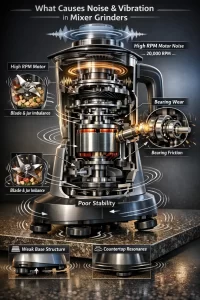
A mixer grinder’s noise is not a single problem but a combination of mechanical and operational factors. The loud sound you hear is a symphony of moving parts working at incredible speeds.
1. The Motor and RPM
The heart of the noise is the universal motor, designed to generate high speeds (RPMs) of 18,000 to 22,000 rotations per minute. This high-speed operation creates significant sound from the motor’s internal components and the cooling fan. Higher RPM directly translates to higher frequency noise.
2. Blade and Jar Imbalance
Proper mixer grinder balancing is crucial. If the blades are not perfectly symmetrical or if the ingredients inside the jar are unevenly distributed, it creates an imbalance. As the jar spins, this imbalance causes violent shaking and rattling, which we perceive as mixer grinder vibration and loud noise.
3. Bearing Quality and Wear
The motor shaft spins on small ball bearings. High-quality, precision-engineered bearings allow for smooth, quiet rotation. Over time, or in cheaper models, these bearings can wear out, losing their lubrication. This creates friction and a distinct grinding or screeching sound.
4. Base Structure and Stability
A lightweight or poorly designed base cannot absorb the intense vibrations generated by the motor. A lack of mixer grinder stability means the entire unit will shake on the countertop, amplifying the noise. This is why a vibration free mixer grinder often features a heavy, reinforced base with anti-skid vacuum feet.
5. The Grinding Surface
Placing your mixer grinder on an unstable or resonant surface, like a thin wooden table, can turn the entire surface into a speaker, amplifying the operational noise. A solid granite or marble countertop is a much better choice.
Also, Read: The Ultimate Guide to 15 Types of Mixer Grinders for Every Kitchen
Low Noise vs. Silent Mixer Grinder: Setting Realistic Expectations

According to guidelines from the World Health Organization, prolonged exposure to noise above safe limits can impact comfort and well-being, which is why choosing low-noise kitchen appliances matters for daily home use.
The term silent mixer grinder is more of a marketing concept than a reality. Any appliance that uses a high-speed motor to pulverize hard ingredients will inherently produce noise. It’s a matter of physics.
- Normal Mixer Grinder: Operates at 85-95 decibels (dB), which is comparable to a lawnmower or a loud blender.
- Low Noise Mixer Grinder: These models incorporate specific noise-dampening technologies to operate in the 75-85 dB range. While not silent, the reduction is noticeable and makes the experience more comfortable.
- Silent Mixer Grinder: A truly silent machine does not exist in this category. The term is often used to describe models at the lowest end of the “low noise” spectrum.
Effective mixer grinder noise reduction is about minimizing sound, not eliminating it. The goal is to bring the noise down to a more tolerable level without compromising grinding performance.
How Vibration-Free Mixer Grinder Technology Works
Vibration is the physical manifestation of energy that isn’t being used for grinding. A vibration free mixer grinder is engineered to absorb and manage this energy efficiently.
1. Precision Motor Balancing
The manufacturing process for high-quality motors involves dynamically balancing the rotor and shaft. This ensures the motor spins with perfect symmetry, minimizing the primary source of vibration before it even starts.
2. Shock-Absorbing Mounts
In a well-designed machine, the motor is not bolted directly to the plastic body. Instead, it rests on rubber or silicone mounts. These act as shock absorbers, isolating the motor’s vibrations from the outer casing and preventing them from being transferred to the countertop.
3. Reinforced Base and Anti-Skid Feet
Mixer grinder stability starts at the bottom. A heavy, wide base provides a solid foundation. This is complemented by strong vacuum-suction feet that grip the counter, preventing the mixer from “walking” or rattling during heavy grinding.
4. Optimized Airflow Design
The motor’s cooling fan is a significant source of noise. An aerodynamically designed fan blade can move the same amount of air with less turbulence, resulting in a quieter hum instead of a loud roar.
Commercial Mixer Grinder Noise: A Class of Its Own
Walk into any professional Indian kitchen, and the roar of the heavy duty mixer grinder design is unmistakable. The level of commercial mixer grinder noise is far greater than any domestic model, and for good reason.
High-capacity models like Jaguar 2500W heavy duty mixer grinder are built for continuous grinding, which explains their higher noise output.
Why Are They So Loud?
- Sheer Power: Commercial mixers use motors ranging from 1200W to 2000W+, such as the 2000 watt commercial mixer grinder, designed for bulk operations. This immense power, needed for continuous operation, generates extreme mechanical and electrical noise.
- Load Capacity: These machines grind kilograms of ingredients at once. The sound of blades pulverizing massive quantities of hard spices or thick batter is inherently loud.
- Focus on Durability over Comfort: The primary goal of a heavy duty mixer grinder design is performance and longevity. Soundproofing adds complexity and cost, and in a noisy commercial kitchen, user comfort from noise is a lower priority than output and reliability.
Kitchen Appliance Noise Control in Professional Settings
Restaurants and hotels manage commercial mixer grinder noise through several strategies:
- Placement: Grinding stations are often located in a separate area away from the main service or dining areas.
- Dampening Surfaces: Placing machines on thick rubber mats can absorb some of the vibration transferred to the floor or counters.
- Maintenance: Regular mixer grinder balancing of blades and servicing of motor bearings are critical to prevent noise from worsening over time.
Engineering for Quiet: The Anatomy of a Low Noise Mixer Grinder
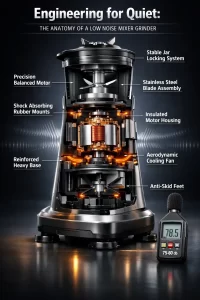
Achieving effective mixer grinder noise reduction requires a holistic engineering approach, focusing on multiple components.
- Insulated Motor Housing: The motor is encased in a specially designed housing that contains the sound. Some high-end models use a double-walled body with insulating material in between.
- Thicker Outer Body: A thicker, high-quality ABS plastic or metal body is less prone to resonating and vibrating than a thin, flimsy one.
- Vibration Damping Materials: Strategic placement of rubber gaskets and silicone pads throughout the machine’s assembly helps to absorb micro-vibrations.
- Stable Jar Locking Mechanism: A secure lock between the jar and the base is essential. If the jar is loose, it will rattle violently at high speeds, creating significant noise.
It’s important to note the trade-off. Often, features that reduce noise can also trap heat. Therefore, a good low noise mixer grinder must balance sound insulation with efficient motor cooling to prevent overheating.
Practical Tips to Reduce Mixer Grinder Noise and Vibration
While you can’t change your machine’s core design, you can adopt several habits to significantly reduce operational noise.
At Home
- Place it on a Damp Cloth or Mat: Placing a folded, damp kitchen towel or a thick rubber mat under your mixer grinder is the quickest way to reduce vibration. The material absorbs the shaking and stops it from amplifying on the countertop.
- Load the Jar Correctly: Don’t overload the jar. Ensure ingredients are evenly distributed and chopped into smaller pieces before grinding. For dry grinding, use the “pulse” function a few times to break up large pieces before switching to continuous speed.
- Ensure a Stable Surface: Use the mixer on a flat, heavy surface like a granite countertop. Avoid placing it near the edge of the table.
- Hold the Lid: During initial high-speed grinding, gently placing your hand on the lid can help stabilize the jar and reduce rattling.
In a Commercial Setting
- Regular Blade and Bearing Maintenance: Sharpen or replace blades regularly. A blunt blade smashes ingredients instead of cutting them, requiring more force and creating more noise. Lubricate or replace motor bearings as part of a routine maintenance schedule.
- Check for Jar and Coupler Wear: Worn-out jar couplers can cause misalignment and vibration. Replace them as soon as they show signs of damage.
- Secure Installation: Ensure heavy-duty machines are placed on level flooring. For extremely powerful units, consider bolting them to a dedicated, stable work table.
Conclusion: Finding the Balance Between Power and Peace
The noise from a mixer grinder is a direct by-product of the immense power required for efficient grinding. While a completely silent mixer grinder remains a theoretical concept, significant mixer grinder noise reduction is achievable through intelligent design and mindful usage. By understanding the principles of mixer grinder balancing, stability, and vibration control, you can choose a machine that performs exceptionally without disrupting your home.
Whether you invest in a modern low noise mixer grinder or apply simple damping techniques to your existing appliance, taking control of kitchen appliance noise control leads to a safer, more pleasant, and ultimately more enjoyable cooking experience.
Also, Read: The Ultimate Guide to the Best Mixer Grinder Company in India (2026)
Frequently Asked Questions (FAQs)
Are low noise mixer grinders really silent?
No, a completely silent mixer grinder does not exist due to the nature of high-speed motors. "Low noise" models are designed to operate at a more comfortable decibel level (typically 75-85 dB) compared to standard models (85-95 dB), but they are not silent.
How can I reduce mixer grinder vibration?
To reduce mixer grinder vibration, ensure the blades are balanced and the jar is not overloaded. Check that the rubber feet are clean and grip the counter firmly. Placing the unit on a vibration-damping mat is also highly effective.
Why are commercial mixer grinders so noisy?
Commercial mixer grinder noise is intense due to their powerful motors (1200W+), which are built for continuous, heavy-duty grinding. Their design prioritizes performance, durability, and high output over noise reduction for user comfort.
How do I check if a mixer grinder is vibration free?
A true vibration free mixer grinder is an ideal, but you can check for good stability. Run the machine with an empty jar. It should feel stable and not "walk" or rattle excessively on the countertop. A well-balanced machine will have minimal vibration that is mostly absorbed by its base.