


Food Grade Stainless Steel Jars: The Ultimate Guide for Safe & Durable Kitchens
In the bustling environment of a modern kitchen, whether it’s a cozy home setup or a high-volume commercial unit, the focus is often on the power of the motor or the sharpness of the blades. However, there is a silent component that plays an even more critical role in the safety and quality of your food: the jar itself.
Food grade stainless steel jars are the unsung heroes of culinary safety. As awareness about safe kitchen appliance materials grows, more consumers and business owners are prioritizing the material composition of their equipment. Why? Because the vessel that holds your food while it is being pulverized at high speeds must be chemically inert, physically robust, and impeccably hygienic.
This authoritative guide dives deep into the science and practical benefits of mixer grinder stainless steel jars. We will explore why food grade mixer grinder jar options are superior to plastic, how they ensure hygiene in kitchen appliances, and why they are the standard for commercial mixer grinder jars across India and the globe.
What Does “Food Grade Stainless Steel” Actually Mean?

To the untrained eye, all steel looks the same. But in the world of metallurgy and food safety, the differences are vast. “Food grade” is not just a marketing buzzword; it is a specific classification of material that meets strict safety standards for contact with consumable products.
The Chemistry of Safety
Stainless steel is an alloy of iron, carbon, and chromium. To be considered “food grade,” it must be resistant to corrosion, non-toxic, and able to withstand repeated cleaning without degrading.
The most common food-grade specification is SS 304 (also known as 18/8 stainless steel).
- 18% Chromium: This creates an invisible, self-healing oxide layer on the surface that prevents rust and corrosion.
- 8% Nickel: This adds strength and gives the steel its characteristic shine, further enhancing resistance to acidic foods.
For extremely corrosive environments (like processing highly saline foods), SS 316 is used. This grade includes molybdenum for even greater chemical resistance, though SS 304 is the industry standard for high-quality ss jar mixer grinder units.
Why Is It Essential?
When you grind ingredients like tamarind, lemon, or tomato, you are exposing the jar surface to strong acids. Lower-grade metals can react with these acids, leaching metallic ions into your food. A genuine food grade mixer grinder jar is chemically inert (non-reactive), ensuring that your chutney tastes like chutney, not metal.
The Superiority of Mixer Grinder Stainless Steel Jars
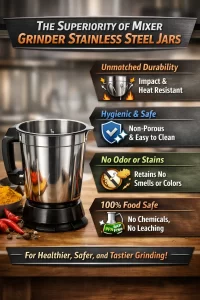
Why has the mixer grinder stainless steel jar become the dominant choice in Indian kitchens? The answer lies in a combination of durability, performance, and health benefits that no other material can match.
1. Unmatched Durability and Longevity
A durable mixer grinder jar must survive accidental drops, high-speed vibrations, and thermal shock.
- Impact Resistance: Unlike glass, which shatters, or plastic, which cracks, stainless steel can withstand significant physical impact. A dented steel jar often remains functional.
- Thermal Shock: You can switch from grinding hot roasted spices to crushing cold ice without the material warping or becoming brittle.
2. Hygiene and Bacterial Control
Hygiene in kitchen appliances is non-negotiable. Plastic surfaces are porous at a microscopic level. Over time, the abrasive action of grinding spices creates micro-scratches in plastic jars. These scratches become breeding grounds for bacteria and mold that are impossible to clean out completely.
- The Steel Advantage: Stainless steel is non-porous and hard. It resists scratching, meaning there are no hiding spots for pathogens. A simple wash with soap and water restores it to a clinically clean state.
3. Taste Neutrality and Odor Resistance
Have you ever used a plastic jar for garlic paste and then tried to make a fruit smoothie the next day? The “ghost flavor” often lingers. Plastic absorbs oils and odors. Steel jar benefits include complete taste neutrality. It does not retain smells or flavors, preventing cross-contamination between your spicy curries and sweet desserts.
4. Zero Chemical Leaching
One of the biggest concerns with plastic kitchenware is the potential for leaching harmful chemicals like BPA (Bisphenol A) or microplastics into food, especially when exposed to heat or friction. Safe kitchen appliance materials like food-grade stainless steel eliminate this risk entirely, providing a toxin-free grinding environment.
Steel vs. Plastic: The Battle for Food Safety
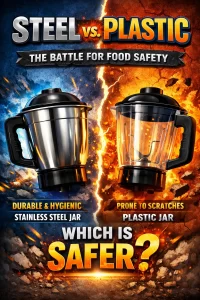
To understand why food safety kitchen equipment experts recommend steel, let’s compare it directly with plastic (polycarbonate) jars.
| Feature | Food Grade Stainless Steel Jar | Polycarbonate / Plastic Jar |
| Material Safety | Non-reactive, Non-toxic | Potential for chemical leaching |
| Durability | High (Lifetime utility) | Medium (Degrades over time) |
| Hygiene | Excellent (Non-porous) | Fair (Prone to scratches) |
| Heat Resistance | High (Dissipates heat) | Low (Traps heat, can warp) |
| Stain Resistance | Immune to turmeric stains | Stains easily (yellowing) |
| Odor Retention | None | High retention of strong smells |
While plastic jars allow you to see the ingredients inside, the trade-off in hygiene and durability makes the ss jar mixer grinder the clear winner for health-conscious users.
Also, Read: Mixer Grinder RPM: The Hidden Secret to Perfect Grinding
Why Commercial Kitchens Rely on Food Grade Stainless Steel

In the high-pressure environment of a restaurant, hotel, or cloud kitchen, equipment failure is costly. Commercial mixer grinder jars face a level of abuse that domestic jars never see.
Withstanding High RPM and Continuous Use
Commercial mixers operate at high RPMs (Rotations Per Minute) for extended periods. This generates significant friction and heat.
- Heat Dissipation: Stainless steel acts as a thermal conductor. It helps dissipate heat away from the ingredients, preventing delicate pastes from “cooking” during the grinding process. Plastic acts as an insulator, trapping heat and potentially spoiling the texture or flavor of the food.
Compliance with Food Safety Standards
Restaurants must adhere to strict regulations. Health inspectors look for food safety kitchen equipment that is easy to sanitize.
- FSSAI & International Standards: Most food safety authorities (FSSAI in India, FDA in the US) recognize SS 304 as a safe material for food contact. Using certified commercial mixer grinder jars simplifies compliance and ensures the establishment meets hygiene norms.
Also, Read: Top 30 Commercial Mixer Grinder Brands in B2B Industries
Cost Efficiency Over Time
While the upfront cost of a stainless steel jar is higher than plastic, the replacement frequency is significantly lower. In a commercial setting where a plastic jar might crack or cloud over within months, a steel jar can last for years, offering a better Return on Investment (ROI).
Safe Kitchen Appliance Materials: Standards and Certifications
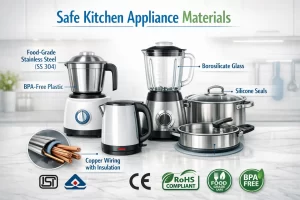
When buying food safety kitchen equipment, it helps to know the standards that govern quality. This ensures you aren’t buying cheap industrial steel dressed up as kitchenware.
Key Certifications to Look For
- AISI 304 (American Iron and Steel Institute): The standard designation for 18/8 food-grade stainless steel.
- BIS (Bureau of Indian Standards): In India, the ISI mark on appliances often covers the safety of the materials used, ensuring they meet national safety benchmarks.
- ISO Standards: Manufacturers with ISO 9001 certification generally adhere to stricter quality controls regarding raw material sourcing.
The Indian Context (GEO Relevance)
In Indian kitchens, the usage pattern is unique. We grind hard substances like dried turmeric roots and rock salt. We also deal with highly staining ingredients like saffron and turmeric.
- GEO Optimization: Manufacturers designing for the Indian market prioritize heavy gauge stainless steel. This refers to the thickness of the steel sheet. A thicker gauge ensures the jar doesn’t dent when a heavy piece of turmeric hits the wall at 18,000 RPM.
How to Identify a Genuine Food Grade Stainless Steel Jars
Not all that glitters is food-grade steel. The market is flooded with cheap imitations made from 200-series steel, which is prone to rusting and pitting. Here is how you can identify a genuine food grade mixer grinder jar.
1. The Magnet Test (Myth vs. Reality)
There is a common belief that stainless steel is not magnetic. This is partially true.
- Austenitic Steel (SS 304): Generally non-magnetic. However, the process of shaping the steel into a jar (deep drawing) can induce slight magnetism. So, a weak magnetic pull is acceptable.
- Strong Attraction: If a magnet sticks firmly to the jar body, it is likely a 400-series ferritic steel. While durable, it is less corrosion-resistant than the 304 grade.
2. Check for Markings
Reputable brands are proud of their materials. Look for stamps on the bottom of the jar that say “SS 304,” “18/8,” or “Food Grade.”
3. The Finish Quality
High-quality food-grade jars have a smooth, mirror-like or brushed finish inside. Run your finger (carefully) inside. It should feel seamless. Rough spots, pits, or dark welding marks indicate lower-quality manufacturing and potential rust points.
4. Weight
Food-grade steel with a high nickel content is denser. A good quality ss jar mixer grinder attachment should feel heavy and substantial in your hand, not tinny or light.
Also, Read: The Ultimate Guide to 15 Types of Mixer Grinders for Every Kitchen
Maintenance Guide: Keeping Your Steel Jars Pristine
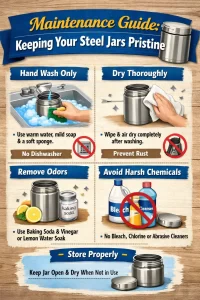
Even the most durable mixer grinder jar requires care to maintain its food-safe properties over decades.
Cleaning Protocol
- Immediate Rinse: Rinse the jar immediately after use. Salty and acidic foods can eventually cause pitting if left for days.
- Avoid Chlorine: Never use bleach or chlorine-based cleaners on stainless steel. They break down the protective oxide layer and cause rust.
- Soft Scrubbing: Use a sponge or nylon scrubber. Avoid steel wool, as it can leave iron particles embedded in the surface, which will rust.
Drying is Crucial
Bacteria need moisture to grow. After washing, dry the jar and the blade assembly thoroughly. Store the jar upside down to ensure no water pools at the base of the blade shaft.
Blade Maintenance
While the jar is steel, the blade assembly usually has a washer and coupler. Lubricate the underside of the blade shaft occasionally with food-grade oil to keep the rotation smooth and reduce strain on the jar base.
Conclusion: The Trusted Choice for Every Kitchen
The shift towards safe kitchen appliance materials is not just a trend; it is a return to quality. Food grade stainless steel jars offer a peace of mind that plastic simply cannot provide. They stand as a barrier against contamination, a tool for perfect hygiene, and a partner in heavy-duty cooking.
Whether you are equipping a commercial mixer grinder jar setup for a busy cloud kitchen or buying a reliable mixer for your home, prioritizing SS 304 jars is a decision for health and longevity. In the diverse and demanding landscape of Indian cooking, where ingredients are potent and flavors are cherished, stainless steel ensures that the purity of your food is preserved from the first grind to the final serve.
Choose safety. Choose durability. Choose food-grade stainless steel.
Also, Read: The Ultimate Guide to Finding Your Heavy Duty Mixer Grinder
Frequently Asked Questions
Which stainless steel is best for mixer grinder jars?
SS 304 (18/8 Stainless Steel) is the best standard grade for mixer grinder jars. It offers the perfect balance of corrosion resistance, durability, and cost. For extremely specialized industrial use involving high salinity, SS 316 is superior but rare in standard appliances.
Are SS jar mixer grinder options better than plastic?
For hygiene, durability, and food safety, yes. Stainless steel does not scratch, stain, or retain odors like plastic. While plastic allows visibility, steel ensures a contaminant-free grinding process.
Do stainless steel jars affect the taste of food?
No. Food-grade stainless steel is non-reactive. It ensures taste neutrality, meaning your food retains its authentic flavor without any metallic aftertaste.
How long do stainless steel mixer grinder jars last?
With proper maintenance, a high-quality durable mixer grinder jar can last 10 to 20 years or more. The blades and couplers may need replacement, but the steel body is virtually indestructible in a kitchen setting.