


Indian vs Imported Mixer Grinders: Which Is Better for Indian Kitchens?
The mixer grinder is a cornerstone of the modern Indian kitchen. From grinding fresh spices for a flavourful curry to preparing smooth batter for idlis and dosas, its role is undeniable. For decades, Indian brands have been the default choice. However, with a growing number of international appliance brands entering the market, buyers now face a new dilemma. This has led to common confusion: are imported models better, or should one stick to the tried-and-tested Indian brands?
This guide compares Indian vs imported mixer grinders based on performance, durability, price, and suitability for Indian cooking needs. We will explore the key differences to help you decide which is the right fit for your kitchen, whether at home or in a commercial setting.
Understanding the Indian Mixer Grinder Market

Indian cooking is unique and demanding. It involves a wide range of ingredients and preparation techniques that require robust and versatile appliances. The need to grind tough ingredients like turmeric, create fine pastes from coconut and lentils, and whip up chutneys in seconds makes the mixer grinder an essential tool.
The evolution of appliance manufacturing in India has been driven by these specific needs. Early models were simple, but they have since transformed into powerful machines designed to withstand the rigors of daily Indian cooking. This deep understanding of local culinary habits is what sets the Indian market apart.
What Is an Indian Mixer Grinder?
An Indian mixer grinder is an appliance engineered specifically for the demands of Indian cuisine. These machines are built with the understanding that they will be used for both dry and wet grinding of tough, fibrous, and hard ingredients.
Their design philosophy centers on power, durability, and functionality over aesthetics. Key characteristics include high-wattage motors (often 750W and above) with high RPMs, built-in overload protection to prevent motor burnout, and sturdy jars made from stainless steel. Furthermore, a significant advantage is the widespread availability of service centers and spare parts, making repairs simple and affordable. They are the workhorses used in millions of homes and are the default choice for any commercial mixer grinder in India.
What Is an Imported Mixer Grinder?
An imported mixer grinder, often originating from European, American, or East Asian countries, is designed with a different culinary philosophy in mind. These appliances are typically built for tasks like making smoothies, pureeing soft fruits and vegetables, or blending soups. Their intended cooking styles rarely involve the heavy-duty dry and wet grinding that is common in India.
While often sporting a sleek and modern design, they usually come with lower wattage motors and may not be optimized for grinding hard spices or dense batters. A major limitation for Indian usage is their potential struggle with continuous operation and the heat generated during intensive grinding tasks.
Also, Read: The Ultimate Guide to 15 Types of Mixer Grinders for Every Kitchen
Indian vs Imported Mixer Grinders – Key Comparison
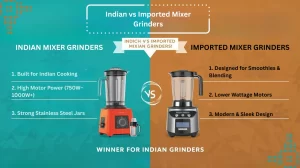
When choosing between these two types of appliances, a direct mixer grinder comparison across key functional aspects is essential. The differences in their design, engineering, and support systems have a direct impact on their suitability for an Indian kitchen.
Motor Power & Performance
An Indian mixer grinder is built with a powerful motor, typically ranging from 500W for basic use to over 1000W for heavy-duty tasks. This high wattage is necessary to handle tough ingredients without straining the motor. In contrast, many imported mixer grinders, often called blenders in their home markets, have motors optimized for lower-intensity tasks and may struggle with the demands of Indian grinding.
Grinding Efficiency
Indian models come with sharp, robust blades specifically designed to pulverize hard spices into fine powders and grind wet ingredients into smooth pastes. Imported models may have blades designed for blending or pureeing, which can be less effective for the fine, consistent texture required in many Indian recipes.
Durability & Lifespan
Built to last, Indian mixer grinders often feature sturdy ABS plastic bodies and thick stainless steel jars. The motors are also designed to handle voltage fluctuations common in many parts of India. Imported models, while well-built, may not be engineered for the same level of stress, potentially leading to a shorter lifespan in a high-usage Indian kitchen.
Voltage Compatibility
Indian appliances are designed to work with the standard 230V/50Hz power supply. While most imported brands entering the Indian market adapt their products, some grey market imports might require a voltage converter, adding an extra point of failure.
Ease of Repair
This is a critical differentiator. For an Indian mixer grinder, spare parts like jars, blades, couplers, and motor brushes are easily available in local markets. Almost any small appliance repair shop can fix them. For imported models, finding spare parts can be a nightmare, often requiring you to contact a centralized service center and wait for weeks.
Mixer Grinder Performance for Indian Cooking

The true test of a mixer grinder lies in its ability to handle the core tasks of Indian cooking. Here’s how the two types stack up.
Dry Spice Grinding
Grinding hard spices like turmeric, cinnamon, and coriander seeds requires immense torque and sharp, durable blades. An Indian mixer grinder excels at this, turning whole spices into fine, aromatic powders in seconds. An imported mixer grinder may either fail to grind them finely or its motor could overheat and trip the overload switch.
Wet Grinding & Batter
Preparing batter for idli, dosa, and vada involves grinding soaked rice and lentils into a thick, smooth paste. This is a high-load, long-duration task. Indian models are specifically designed for this, with powerful motors and ventilation systems to manage heat. Imported blenders are generally not suited for this and can burn out if used for heavy wet grinding.
Continuous Operation
Indian cooking often requires grinding multiple batches of ingredients back-to-back. Indian mixer grinders are built to handle this continuous operation, with robust motors and overload protection. Many imported models have recommended run times that are too short for typical Indian meal preparation.
Heat Handling
Grinding generates heat, which can affect the taste and aroma of spices. While all mixers heat up, Indian models are designed with better ventilation to dissipate heat more effectively during prolonged use, preserving the quality of the ingredients.
For the core tasks of Indian cooking, the Indian mixer grinder is the clear winner due to its specialized design and powerful motor.
Quality & Build – Which Mixer Grinder Lasts Longer?

The longevity of a mixer grinder depends on the quality of its components. A quality mixer grinder in India is judged by its ability to withstand years of rigorous use.
- Motor Quality: Indian brands often use powerful copper-wound motors that are known for their durability and efficiency. These motors are designed to handle the heavy loads of Indian grinding.
- Blade Material: The blades in Indian mixer grinders are typically made from high-grade stainless steel (like SS 304) that resists corrosion and remains sharp for a long time.
- Jar Thickness: The stainless steel jars provided with Indian models are usually thick and sturdy, preventing dents and cracks even when grinding hard ingredients. Imported models may use polycarbonate or thinner steel jars that are more prone to damage.
- Overall Build Quality: While imported models often have a more polished finish, Indian mixer grinders prioritize a robust, functional build that can take a beating in a busy kitchen.
Ultimately, a well-built Indian mixer grinder is more likely to last longer in an Indian home due to its construction being purpose-fit for the environment.
Mixer Grinder Price Comparison – Indian vs Imported
Price is a major factor in any purchase decision. A mixer grinder price comparison reveals significant differences not just in the initial cost but also in long-term value.
- Initial Purchase Price: Generally, Indian mixer grinders are more affordable. You can find a powerful and reliable model from a reputable Indian brand for a fraction of the cost of a premium imported model.
- Maintenance Cost: The cost of maintaining an Indian mixer grinder is very low. Spare parts are cheap and widely available. For an imported grinder, a single replacement jar or blade can sometimes cost as much as a new Indian mixer grinder.
- Spare Part Availability: As mentioned, local markets are flooded with spares for Indian brands. For imported brands, you are completely dependent on the company’s official service network, which can be slow and expensive.
- Long-Term Value: Considering the lower initial price, inexpensive maintenance, and longer functional life in an Indian kitchen environment, an Indian mixer grinder offers far superior long-term value for money.
Also, Read: Your Ultimate Guide to Finding the Best Mixer Grinder in India
Commercial Mixer Grinder India – Why Indian Brands Dominate
In a commercial setting like a restaurant, hotel, or catering business, the demands on a mixer grinder are extreme. They need to run for hours, grinding large quantities of ingredients without fail. This is where Indian brands completely dominate the market.
The reasons are clear: heavy-duty usage requires incredibly robust motors and durable jars, which are the hallmarks of a commercial mixer grinder in India. The ability to handle continuous operation for tasks like making ginger-garlic paste, onion puree, or large batches of batter is non-negotiable. Furthermore, commercial kitchens cannot afford downtime. The easy availability of local support and quick repairs for Indian brands ensures that their operations are never stalled for long due to a faulty appliance. Imported models simply cannot offer this level of performance and support for commercial Indian cooking.
Reliability, Warranty & After-Sales Support
Beyond the product itself, the support system behind it is crucial for peace of mind.
Service Network Comparison
Major Indian brands have a vast service network that extends to even small towns and cities. This makes getting service or repairs convenient. Imported brands usually have service centers only in major metro cities, making it difficult for customers in other areas.
Warranty Handling
While both types offer warranties, the process can be very different. With an Indian brand, you can often walk into a local authorized service center for a quick resolution. For an imported brand, you might have to ship the product to a central facility, leading to longer repair turnaround times.
Repair Turnaround Time
Due to the availability of local technicians and parts, repairs for an Indian mixer grinder are often completed within a day or two. The same repair for an imported model could take weeks.
Trust Factor
For generations, Indian households have relied on domestic brands. This long-standing presence in the market has built a strong trust factor. When you buy from a reliable mixer grinder brand with a history in India, you are also buying into an ecosystem of proven performance and support.
Best Mixer Grinder in India – What Really Matters?
There is no single “best mixer grinder in India” that fits everyone’s needs. The right choice depends entirely on your usage patterns.
If your cooking is limited to smoothies, shakes, and occasional light blending, an imported model might suffice. However, if your daily cooking involves grinding masalas, making batters, and preparing a variety of Indian dishes, your needs are different. For a typical Indian home, a powerful motor (750W or higher), durable build, and strong service support are what truly matter. For commercial needs, a heavy-duty Indian model is the only practical choice. The focus should be on finding an appliance that matches your specific culinary requirements, not just on the brand name or country of origin.
Appliance Manufacturing India vs Imports
The landscape of appliance manufacturing in India has seen tremendous growth and improvement. Indian manufacturers have invested heavily in R&D, leading to significant enhancements in motor technology, design, and overall product quality.
The “Make in India” initiative has further boosted local manufacturing, encouraging brands to produce high-quality appliances that are not only suited for Indian conditions but also comply with strict Indian safety and quality standards (like ISI marking). This local production ensures that the products are perfectly aligned with the needs of the Indian consumer, from voltage compatibility to the types of jars and blades provided.
Common Buying Mistakes While Choosing Mixer Grinders
To make an informed decision, it’s important to avoid common pitfalls.
- Buying Based Only on Price: The cheapest model may not have a powerful enough motor or a durable build, leading to poor performance and a short lifespan.
- Ignoring Motor Power: Choosing a low-wattage mixer for heavy-duty grinding is a recipe for disaster. Always match the motor power to your usage.
- Overlooking Service Support: A fancy mixer grinder is useless if you can’t get it repaired or find spare parts. Always check the brand’s service network in your area.
- Choosing Imported Models Without Research: Many buyers are attracted by the sleek design of imported models without considering their suitability for Indian cooking or the lack of spare part support. This often leads to regret later on.
Final Checklist – Before Buying a Mixer Grinder in India
Before you make a final decision, run through this quick checklist to ensure you’re choosing the right appliance for your needs.
- ✔ Motor Power: Is the wattage (ideally 750W+) suitable for tough Indian grinding?
- ✔ Local Service Availability: Can you easily get the brand serviced in your city or town?
- ✔ Build Quality & Jar Strength: Are the body and jars sturdy enough for heavy use? Check for thick stainless steel jars.
- ✔ Usage Type: Are you buying for simple home use or heavy-duty commercial needs?
- ✔ Long-Term Reliability: Does the brand have a reputation for durability and easy access to spare parts?
Conclusion
The debate of Indian vs imported mixer grinders is less about which is universally superior and more about which is functionally appropriate. While imported models may appeal with their modern aesthetics and international brand names, they are fundamentally designed for a different style of cooking.
For the vast majority of Indian kitchens, both domestic and commercial, an Indian mixer grinder remains the undisputed champion. Its powerful motor, robust build, and design tailored for Indian recipes provide unmatched performance and durability. Paired with an extensive service network and the low cost of ownership, it delivers far greater long-term value. When choosing your next mixer grinder, look beyond the shiny exterior and focus on the power, reliability, and support that will best serve your kitchen for years to come.
Also, Read: The Ultimate Guide to Finding Your Heavy Duty Mixer Grinder
FAQs – Indian vs Imported Mixer Grinders
Do Indian mixer grinders consume more power?
Indian mixer grinders have higher wattage motors, but they are also more efficient at grinding, completing tasks faster. This means they don't necessarily consume more electricity overall for a given task compared to a struggling lower-wattage motor that runs for longer.
Which mixer grinder lasts longer in Indian homes?
An Indian mixer grinder is more likely to last longer. They are built specifically to withstand the rigors of daily Indian cooking, high-load grinding, and voltage fluctuations. Their simple, robust construction and easy repairability also contribute to a longer functional lifespan.
Is service easily available for imported mixer grinders?
No, service is a major challenge for imported mixer grinders. Service centers are usually limited to a few major cities, and spare parts are often expensive and difficult to find. In contrast, Indian brands have extensive service networks across the country.
Are Indian mixer grinders suitable for commercial use?
Yes, absolutely. Heavy-duty models from Indian brands are the standard choice for commercial kitchens, restaurants, and hotels in India. They are designed for continuous, high-volume grinding and are backed by reliable local service support.
Why are Indian mixer grinders louder?
The noise is a byproduct of their powerful, high-speed motors (high RPM) which are necessary for efficient grinding of hard ingredients. While some newer models have better noise insulation, the power required for Indian grinding will always generate a certain level of noise.
Can I use an imported blender for making chutneys?
You might be able to make chutneys with very soft ingredients, but an imported blender will likely struggle with chutneys that contain coconut, roasted lentils, or fibrous herbs like mint and coriander. The result is often a coarse, uneven paste rather than a smooth chutney.
What is overload protection in a mixer grinder?
Overload protection is a safety feature, usually a small red button at the base of the mixer grinder. It automatically cuts off power to the motor if it gets overloaded or overheats, preventing it from burning out. This is a standard feature in almost every Indian mixer grinder.