


Mixer Grinder Safety Features: Ensuring Safety in Commercial Kitchens 2026
In the high-pressure, fast-paced environment of a commercial kitchen, efficiency is king. Chefs and kitchen staff rely on an arsenal of powerful appliances to chop, blend, grind, and cook at speed. Among these, the mixer grinder is a true workhorse. However, with great power comes the great responsibility of ensuring safety. A single appliance malfunction can lead to serious injuries, operational downtime, and costly damages. This makes understanding the safety features in commercial kitchen appliances not just a good practice, but an absolute necessity for industrial kitchen safety.
This comprehensive guide will delve deep into the critical safety mechanisms built into modern appliances, with a special focus on mixer grinder safety features. We will explore everything from essential motor protection systems to design elements that prevent accidents. Furthermore, we’ll discuss the importance of appliance safety standards in India and how kitchen appliance compliance contributes to a safer working environment. By understanding these features, kitchen managers and staff can operate equipment confidently, maximizing productivity without compromising on well-being.
The Paramount Importance of Commercial Kitchen Safety

A commercial kitchen is a convergence of potential hazards: open flames, sharp blades, hot surfaces, wet floors, and powerful electrical equipment. Prioritizing commercial kitchen safety is fundamental to running a successful and ethical food service operation. It protects your most valuable asset—your staff—and ensures the longevity of your expensive equipment.
Preventing Injuries: The most obvious reason for focusing on safety is to prevent accidents. High-speed mixer grinders, if used improperly or if they lack key safety features, can cause severe lacerations or electrical shocks. Robust commercial kitchen equipment safety protocols and properly designed appliances are the first line of defense against such incidents.
Ensuring Operational Continuity: An accident doesn’t just harm an individual; it can bring the entire kitchen to a halt. An equipment breakdown due to a safety failure or an injury to a key staff member can lead to service disruptions, lost revenue, and damage to your establishment’s reputation.
Protecting Your Investment: Commercial kitchen appliances are significant financial investments. Safety features, such as overload protection, are designed not only to protect the user but also to prevent the appliance’s motor from burning out, thereby extending its operational life.
Compliance and Legal Obligations: Adhering to safety standards is often a legal requirement. Ensuring kitchen appliance compliance with regulations like those set by the Bureau of Indian Standards (BIS) is crucial for avoiding penalties and legal liabilities. This commitment to food equipment safety demonstrates a high level of professionalism and care.
A Deep Dive into Mixer Grinder Safety Features
The mixer grinder, with its high-speed rotating blades, is one of the most powerful and potentially dangerous appliances in the kitchen. Manufacturers have therefore integrated a sophisticated mixer grinder protection system to mitigate these risks. Let’s explore these essential mixer grinder safety features in detail.
1. Overload Protection: The Motor’s Guardian
Perhaps the most critical safety feature is the overload protection mixer grinder system. The motor is the heart of the appliance, and it is susceptible to damage from overheating and excessive strain.
What is it? Overload protection is a safety mechanism, usually a small red or black button located at the base of the mixer grinder, designed to protect the motor from burnout. It acts as a circuit breaker.
How it Works: When the mixer is overloaded with too many ingredients, is run for too long without a break, or is grinding ingredients that are too tough, the motor draws excess current. This causes it to heat up rapidly. The overload protection switch detects this surge and automatically trips, cutting off power to the motor and stopping the appliance. This simple action prevents the motor’s copper windings from melting and suffering permanent damage.
Why it’s Essential: This feature is a cornerstone of both user and appliance safety. It prevents fires that could result from an overheated motor and saves the owner the significant cost of repairing or replacing a burnt-out unit. It is a mandatory feature under most appliance safety standards in India. Teaching staff to recognize when this switch has tripped and to understand why (overloading or overheating) is a crucial part of training.
2. Lid-Locking Mechanism: Preventing Spills and Splashes
Another one of the most important mixer grinder safety features is the lid-locking system. This mechanism ensures the appliance will not start unless the jar lid is securely in place and locked.
How it Works: The system typically involves small notches on the lid that must align perfectly with slots on the jar. Once twisted into place, they engage a switch that completes the electrical circuit, allowing the motor to be turned on. If the lid is not locked correctly, the circuit remains open, and the mixer will not start, no matter which speed setting is selected.
Why it’s Essential: This feature is vital for preventing a common cause of kitchen accidents. Without it, accidentally starting the mixer with a loose lid could send hot liquids or sharp food particles flying out of the jar at high velocity. This can cause severe burns or eye injuries. The lid-lock is a simple yet incredibly effective feature that contributes significantly to commercial kitchen safety.
3. Jar Safety Lock: Ensuring Secure Placement
Similar to the lid-lock, many modern mixer grinders feature a jar safety lock. The motor will not engage unless the jar is properly seated and twisted into its locked position on the motor housing.
How it Works: The base of the jar and the top of the motor unit have interlocking grooves. When the jar is placed on the base and rotated, it clicks into place, activating a safety switch. This ensures that the coupler on the jar is properly engaged with the coupler on the motor.
Why it’s Essential: An improperly seated jar can wobble and vibrate excessively during operation, potentially dislodging itself from the motor base. This could cause the spinning jar to fall, creating a dangerous and messy situation. More critically, a poor connection between the couplers can cause them to grind against each other, leading to premature wear, loud noises, and inefficient power transfer. This feature is a core component of a comprehensive mixer grinder protection system.
4. Non-Slip Feet and Sturdy Base
While it may seem basic, the design of the appliance’s base is a fundamental safety feature. Commercial mixer grinders operate at very high RPMs, which can generate significant vibration.
How it Works: Most quality mixer grinders are equipped with vacuum or rubber suction feet. These feet grip the countertop, preventing the appliance from “walking” or moving during operation, even when grinding heavy loads. A heavy, sturdy base also lowers the center of gravity, making the unit more stable.
Why it’s Essential: An unstable mixer grinder is a major hazard. If it moves and falls off the counter while running, it can cause serious injury and damage. This simple design element is a key part of industrial kitchen safety, ensuring the appliance stays put, even under maximum stress.
5. Insulated, Shock-Proof Body
Electrical safety is a major concern in any kitchen, especially given the presence of liquids. All modern, compliant mixer grinders are built with an ABS (Acrylonitrile Butadiene Styrene) plastic body or other high-quality, non-conductive materials.
How it Works: The entire outer casing of the motor unit is made from durable, shock-proof plastic. This insulates the user from the electrical components and the motor inside. The power cords are also heavily insulated and robustly designed to resist fraying and damage.
Why it’s Essential: This feature protects users from the risk of electric shock, which can be fatal. It is a non-negotiable aspect of food equipment safety and a requirement for kitchen appliance compliance with safety standards. A sturdy body also protects the internal components from accidental impacts.
These integrated mixer grinder safety features work together to create a robust system that protects both the user and the appliance itself. When purchasing new equipment, verifying the presence of these features is a critical step.
Broader Safety Features in Commercial Kitchen Appliances
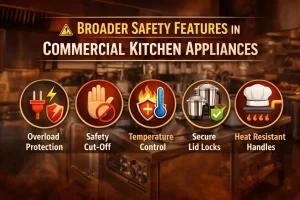
While the mixer grinder has its specific safety needs, many principles apply across all types of powered equipment in a professional kitchen. Understanding these broader safety features in commercial kitchen appliances is essential for a holistic approach to safety.
Emergency Stop Buttons: Many larger pieces of commercial kitchen equipment, such as dough mixers, meat slicers, and food processors, are equipped with large, easily accessible emergency stop buttons (usually red). These allow anyone in the vicinity to immediately cut power to the machine in case of an accident, such as clothing getting caught.
Blade Guards and Safety Shields: Equipment with exposed blades, like meat slicers or band saws, must have fixed or interlocking guards. An interlocking guard works like a lid-lock system; the machine cannot be started unless the guard is in its protective position. This is a fundamental aspect of commercial kitchen equipment safety.
Thermal Cut-off in Ovens and Fryers: Commercial ovens and deep fryers operate at extremely high temperatures. They are equipped with thermal cut-off switches that shut the appliance down if it exceeds a safe operating temperature. This prevents overheating, which could damage the appliance, spoil food, and create a serious fire hazard.
Gas Safety Valves (Flame Failure Devices): For gas-powered appliances like ranges and ovens, a flame failure device is a crucial safety feature. If the flame is accidentally extinguished (e.g., by a gust of air or a boil-over), this device automatically cuts off the gas supply. This prevents dangerous, explosive gas from accumulating in the kitchen.
Interlocking Feed Chutes: Large food processors and vegetable cutters often have long feed chutes. Many are designed with an interlock system that prevents the machine from operating if the chute is removed, making it impossible for a user’s hands to get near the cutting blades.
When procuring any new equipment, it is vital to go beyond the performance specifications and scrutinize these safety features. They are just as important as the appliance’s power or capacity.
The Role of Appliance Safety Standards in India
To ensure a baseline level of safety, governments and independent bodies establish standards and certification marks. In India, the Bureau of Indian Standards (BIS) is the key organization responsible for setting these benchmarks.
BIS Certification and the ISI Mark: For many categories of electrical appliances, including mixer grinders, BIS certification is mandatory. This means the product has been tested and found to comply with the relevant Indian Standard (IS). Products that meet these standards are allowed to display the ISI mark. This mark is a consumer’s assurance that the product meets required safety and quality parameters.
What do the standards cover? The appliance safety standards in India for a mixer grinder (like IS 4250) are comprehensive. They specify requirements for:
- Construction: Materials used, thickness of the body, insulation, and protection against electric shock.
- Electrical Safety: Quality of the power cord, plug, and internal wiring. It also mandates features like the overload protection mixer grinder system.
- Performance: The standards may specify duty cycles (how long the mixer can run continuously) to prevent overheating.
- Mechanical Safety: The stability of the unit, the security of the jars, and the safety of moving parts.
- Labeling: Clear instructions for use, warnings, and specifications must be provided.
Why is Compliance Crucial? For a commercial kitchen, purchasing only ISI-marked appliances is a critical step in risk management. Kitchen appliance compliance is not just about following rules; it’s about guaranteeing a foundational level of safety for your staff. Using non-compliant equipment can void insurance claims in case of an accident and expose the business to significant legal liability. It is the bedrock of a responsible industrial kitchen safety program.
Best Practices for Maintaining a Safe Kitchen Environment
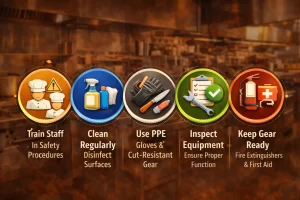
Having appliances with the best safety features is only half the battle. The other half is creating a culture of safety and implementing rigorous operational protocols. The most advanced mixer grinder safety features are rendered useless if the staff is not trained to use the appliance correctly.
- Comprehensive Staff Training:
- Initial Training: No staff member should operate any piece of equipment without thorough training on its specific use and safety features. This includes how to assemble it, how to lock the jar and lid, what the maximum fill line means, and what to do if the overload switch trips.
- Regular Refreshers: Safety training should not be a one-time event. Hold regular refresher sessions to reinforce best practices and introduce any new equipment or procedures.
- Understanding “Why”: Don’t just teach the “how”; explain the “why.” When staff understand that the lid-lock prevents severe burns or that the overload switch prevents fires, they are more likely to respect and follow the procedures.
- Proper Usage and Operation:
- Read the Manual: Always read and keep the user manual for every appliance. It contains vital information specific to that model’s operation and safety features.
- Respect Duty Cycles: Train staff to run mixer grinders in short bursts with pauses in between, as recommended by the manufacturer. This simple habit dramatically reduces motor strain and the risk of overheating.
- Do Not Defeat Safety Mechanisms: Staff must be strictly forbidden from attempting to bypass any safety features, such as jamming a lid-lock switch or disabling a guard. This is a recipe for disaster.
- Use the Right Jar for the Job: Use the correct jar for the task at hand. Trying to dry-grind spices in a liquidizing jar can put unnecessary strain on the motor and blades.
- Routine Inspection and Maintenance:
- Daily Checks: Before the start of each shift, a designated person should conduct a quick visual inspection of key appliances. For a mixer grinder, this includes checking the power cord for damage, ensuring the couplers are not worn, and verifying the rubber feet are intact.
- Cleaning is a Safety Issue: Regular, thorough cleaning is part of food equipment safety. Food residue can interfere with the proper functioning of safety interlocks. More importantly, spillage on the motor unit can seep inside and damage electrical components, creating a shock hazard.
- Report Faults Immediately: Create a clear protocol for reporting any malfunction, strange noise, or damage. A “if you see something, say something” policy is vital. An appliance that is not working correctly must be taken out of service immediately, labeled as “FAULTY,” and not used until it is repaired by a qualified technician.
- A Safe Physical Environment:
- Stable Surfaces: Ensure all countertop appliances are placed on flat, stable, and dry surfaces.
- Clear Workspace: Keep the area around powerful appliances clear of clutter. This prevents items from falling into moving parts and ensures the operator has a safe space to work.
- No Water Near Electrics: Reinforce the rule of keeping hands and surfaces dry when operating electrical appliances.
By combining appliances with robust mixer grinder safety features and a kitchen culture that prioritizes safe practices, you create a truly secure and efficient working environment. This holistic approach to commercial kitchen safety is the hallmark of a well-managed professional operation.
The Future of Kitchen Appliance Safety
As technology advances, so do the safety features in commercial kitchen appliances. We are seeing a move towards smarter, more intuitive systems.
Smart Interlocks: Future appliances may feature more advanced sensors that can detect not just if a lid is locked, but also if the contents are too hot or if the jar is overfilled, preventing operation in unsafe conditions.
Automatic Speed Regulation: Some high-end models are beginning to incorporate sensors that detect the load and automatically adjust motor speed for optimal performance without overheating, adding another layer to the mixer grinder protection system.
Wireless Monitoring: In the future of industrial kitchen safety, managers might be able to monitor equipment status remotely. An app could alert them if an appliance’s overload protection has tripped or if a machine is due for maintenance, allowing for proactive safety management.
Ultimately, the goal of all these innovations remains the same: to create a kitchen where powerful tools can be used to their full potential without posing a threat to the people who operate them.
Conclusion: A Non-Negotiable Commitment
Safety in a commercial kitchen is not a matter of choice; it is a fundamental responsibility. From the macro-level of industrial kitchen safety protocols to the micro-level of individual mixer grinder safety features, every detail matters. Features like the overload protection mixer grinder system, lid and jar locks, and shock-proof bodies are the result of careful engineering designed to prevent accidents and protect your investment.
When you invest in an appliance, you are also investing in its safety systems. Always prioritize equipment that demonstrates clear kitchen appliance compliance with recognized standards like the ISI mark. However, remember that technology alone is not enough. This must be paired with rigorous training, consistent maintenance, and a culture where every member of the team sees safety as their personal responsibility. By embracing this dual approach, you can ensure your kitchen is not only productive and efficient but also a truly safe place to work.