


Why Did Your Mixer Grinder Stop Working? A Complete Guide to Mixer Grinder Motor Failure
It’s a familiar scene in many kitchens: you’re in the middle of preparing a delicious curry, the onions and tomatoes are in the jar, and you turn the knob. A low hum, a sudden silence, and then… nothing. The trusty appliance that powers your daily cooking has given up. Mixer grinder motor failure is frustrating, disruptive, and often happens at the most inconvenient times.
But why does it happen? Is it just bad luck, or are there underlying habits that slowly kill the motor?
For most households and commercial kitchens, the mixer grinder is indispensable. Yet, we rarely think about the complex mechanics inside until something goes wrong. Understanding the root causes of mixer grinder motor problems can save you from expensive repairs or the need for a premature replacement.
This comprehensive guide dives deep into the heart of the machine. We will explore the common causes of mixer grinder failure, walk you through practical mixer grinder troubleshooting steps, and provide a robust motor maintenance guide to ensure your appliance runs smoothly for years. Whether you are a home cook or running a busy restaurant, this article will help you prevent kitchen appliance motor issues before they start.
Understanding the Heart of the Machine: The Motor
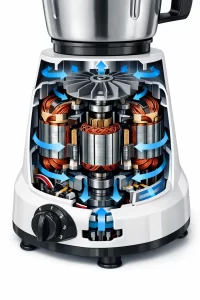
Before we can diagnose failure, we must understand what we are dealing with. The motor is the engine of your mixer grinder. In India and many other regions, these are typically universal motors, designed to operate at high speeds (RPM) to cut through tough spices and grains.
When you switch the mixer on, electricity flows through the motor’s windings (coils of wire), creating a magnetic field that spins the rotor. This spinning action is transferred to the blades via a coupler. Mixer grinder motor failure usually occurs when one part of this high-speed electrical system breaks down due to heat, stress, or wear.
The motor is resilient, but it is not invincible. It relies on airflow for cooling and specific electrical parameters to function. When these conditions are violated—by overloading the jar, blocking air vents, or unstable voltage—the motor suffers.
Common Signs of Impending Motor Failure
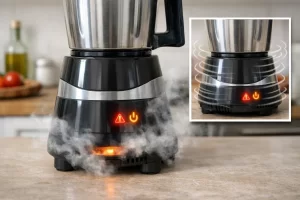
Motors rarely die instantly without warning. They often scream for help before the final breakdown. Recognizing these early signs is crucial for motor damage prevention.
The Burning Smell
If you detect a sharp, acrid smell of burning plastic or varnish while grinding, stop immediately. This is the most common indicator of a mixer grinder overheating issue. The smell comes from the varnish coating on the copper motor windings melting due to excessive heat. If ignored, the windings will short-circuit, leading to permanent failure.
Unusual Noise Levels
Mixer grinders are naturally loud, but you know the sound of your machine. If the usual roar changes to a grinding, screeching, or clanking noise, something is wrong. This could indicate worn-out bearings, a broken fan, or a misalignment in the motor shaft.
Smoke Emission
Seeing smoke is a critical red flag. It usually means the insulation inside the motor is burning. If smoke comes out of the base unit, unplug the machine instantly. Continuing to run it is a fire hazard and guarantees total motor destruction.
The Jar Won’t Rotate (Humming Sound)
Sometimes, you turn the knob, and the motor hums but the blades don’t spin. This “jammed” state often points to a mechanical blockage, a seized motor bearing, or a broken coupler that isn’t engaging with the motor shaft.
Frequent Tripping of the Overload Switch
The red button at the bottom of your mixer is the Overload Protection (OLP) switch. If this trips frequently, it’s a sign that the motor is drawing too much current, likely due to heavy loads or internal friction. Ignoring this and repeatedly resetting it without fixing the root cause will eventually burn out the motor.
Top Causes of Mixer Grinder Failure
Why do motors fail? While manufacturing defects exist, most mixer grinder motor problems stem from usage patterns. Here are the primary culprits:
Overloading the Jars
This is the number one cause of failure. Stuffing the jar to the brim with soaked rice or hard spices puts immense strain on the motor. The motor has to work harder to turn the blades, drawing more current and generating excessive heat. This is a classic recipe for mixer grinder motor failure.
Prolonged Continuous Usage
Domestic motors are not designed for continuous operation. They need breaks. Running a standard mixer for 15 minutes straight to make idli batter will overheat the windings. Most manufacturers recommend running the machine for 3-5 minutes and then giving it a 2-minute break.
Voltage Fluctuations
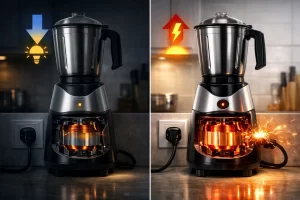
Motors are sensitive to voltage. In areas with unstable power supply, sudden spikes or drops in voltage can damage the motor’s internal wiring. Low voltage forces the motor to draw more current to maintain speed, leading to overheating. High voltage can burn out the coils instantly.
Liquid Leakage
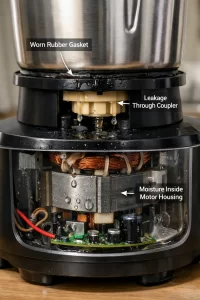
If the rubber gasket in your jar is worn out, liquids can leak through the coupler and seep into the motor housing. Water and electricity are a dangerous mix. Moisture can rust the bearings or cause a short circuit in the motor windings, leading to irreversible damage.
Worn-Out Bearings
The motor shaft spins on bearings. Over time, these bearings lose lubrication and wear out. This increases friction, making the motor work harder and hotter. A seized bearing can stop the motor completely, even if the electrical components are fine.
Mixer Grinder Overheating Issue: The Silent Killer
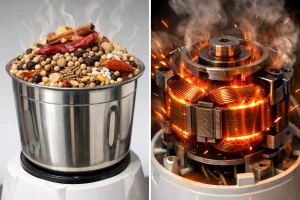
Heat is the enemy of all electronics, but for motors, it is lethal. The mixer grinder overheating issue is the precursor to almost all major failures.
How Overheating Happens
When the motor runs, electrical resistance generates heat. A fan attached to the motor shaft usually expels this heat through vents in the bottom or side of the body. Overheating occurs when:
- Heat Generation Exceeds Dissipation: You are running it too long or with too heavy a load.
- Airflow is Blocked: You have placed the mixer on a soft surface (like a towel or plastic mat) that blocks the bottom vents.
- Dust Accumulation: Dust and kitchen grease can clog the ventilation grills over time.
The Consequence
As heat rises, the insulation on the copper wires inside the motor degrades. Once the insulation melts, the wires touch each other (short circuit), and the motor burns out. In severe cases, the plastic body of the mixer can warp or melt.
Prevention Tip: Always place your mixer grinder on a hard, flat surface to ensure proper airflow. Never cover the unit while it is hot.
Troubleshooting: What to Do When It Stops

Before you rush to a repair shop or buy a new one, try these mixer grinder troubleshooting steps. Many issues are minor and can be fixed at home.
Step 1: Check the Power Supply
It sounds obvious, but ensure the plug is firmly in the socket and the switch is on. Check if there is power in that specific outlet by testing another appliance.
Step 2: The Magic Red Button (OLP Reset)
If the mixer stopped suddenly while grinding, check the bottom of the unit. You will see a small red switch (the Circuit Breaker).
- Unplug the mixer.
- Remove the jar and reduce the quantity of ingredients.
- Wait for 5-10 minutes to let the motor cool down.
- Press the red button.
- Plug it back in and try running it empty for a second.
This fixes 90% of sudden stoppages caused by overloading.
Step 3: Check for Blade Jamming
With the mixer unplugged, try to rotate the coupler (the plastic teeth on top of the motor unit) by hand. It should spin freely. If it is stiff or stuck, something is jamming the motor shaft, or the bearings have seized. Do not force it by switching on the power.
Step 4: Inspect the Coupler
Look at the underside of the jar and the top of the motor base. The plastic teeth (couplers) connect the motor to the jar. If these teeth are broken or worn down (rounded off), the motor will spin, but the blades won’t. Couplers are cheap and easy to replace.
Commercial Mixer Grinder Repair vs. Domestic Repair
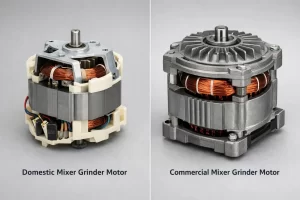
The approach to commercial mixer grinder repair differs significantly from domestic models.
Complexity and Cost
Commercial machines found in restaurants use heavy-duty motors (1000W to 2000W+). These motors often have copper windings and robust metal bodies. When they fail, it is usually cheaper to repair them than replace them. The cost of rewinding a commercial motor is a fraction of the machine’s price.
For domestic mixers (500W-750W), major motor repairs like rewinding can sometimes cost 50-60% of the price of a new unit. In such cases, replacement is often the smarter financial choice unless the machine is high-end.
Professional Intervention
Commercial units often have capacitors and complex wiring for continuous operation. Troubleshooting these requires a professional electrician or authorized service technician. Amateur attempts at commercial mixer grinder repair can lead to safety hazards or voiding expensive warranties.
Motor Damage Prevention: Best Practices
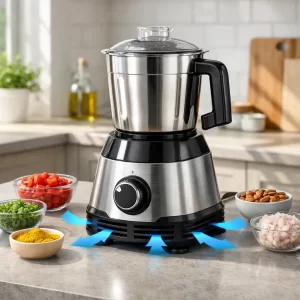
Prevention is always better than cure. Adopting these habits will significantly extend the life of your appliance.
The “Pulse” Technique
Instead of turning the knob directly to speed 3, use the “Pulse” or “Whip” button first. Pulsing the ingredients breaks down large chunks into smaller pieces, reducing the initial load on the motor when you switch to continuous grinding.
Load Management
Never fill the jar more than 50% for dry grinding and 75% for wet grinding. The ingredients need space to move and circulate. If the jar is packed tight, the blades can’t move, and the motor stalls.
Add Water Correctly
For wet grinding, start with a little water. If the motor struggles, add water in small increments through the lid cap. Too much water initially can cause leaks; too little causes strain.
Cool Down Periods
Respect the duty cycle. If you are grinding a tough batter, do it in batches. Let the motor cool down for at least 2-3 minutes between batches. If the base feels hot to the touch, give it a 15-minute break.
Mixer Grinder Safety Tips
Safety is paramount when dealing with high-speed kitchen appliance motor issues.
- Never Operate Without a Lid: High-speed blades can fling hot or hard ingredients out, causing injury.
- Unplug Before Touching Blades: Never put your hand or a spoon inside the jar while the unit is plugged in. A specific “on” switch isn’t enough safety; unplug it completely.
- Dry Hands Only: Never operate the switches with wet hands to avoid electric shock.
- Stable Surface: Ensure the vacuum feet at the bottom are gripping the counter. A vibrating mixer can walk off the edge of a table if not secured.
- Check the Cord: Periodically inspect the power cord for cuts or fraying. Exposed wires are a major electrocution risk.
Motor Maintenance Guide: Care for Longevity
A little maintenance goes a long way. Follow this motor maintenance guide to keep your machine in top shape.
Cleaning the Motor Unit
Wipe the motor base with a damp cloth after every use. Remove any food splatter immediately. If chutney or batter dries on the body, it can flake off and fall into the ventilation gaps. Never immerse the base unit in water.
Lubrication
Every few months, run the mixer empty for 5 seconds to listen to the sound. If it sounds dry or screechy, the shaft might need lubrication. For most users, this requires a service center visit, but putting a drop of food-grade oil on the blade shaft of the jars after washing can keep the jar bearings smooth, reducing the load on the motor.
Vent Maintenance
Use a soft brush (like an old toothbrush) to clean the dust and lint from the air vents on the bottom of the mixer. This ensures the internal fan works efficiently to cool the motor.
Coupler Check
Inspect the plastic couplers on the motor and jars regularly. If they show signs of wear, replace them immediately. A worn coupler causes vibration, which damages the motor bearings over time.
When to Say Goodbye: Repair vs. Replace
Despite your best efforts at motor damage prevention, a time will come when the machine fails. How do you decide?
Repair if:
- It is a minor issue like a broken coupler, carbon brush replacement, or a tripped overload switch.
- The machine is a high-end, heavy-duty model or a commercial unit.
- The motor hums but doesn’t rotate (often a capacitor or jamming issue, which is cheap to fix).
Replace if:
- There was smoke and a strong burning smell (motor rewinding is expensive and often reduces efficiency).
- The body of the mixer is cracked or melted.
- The cost of repair is more than 40% of a new machine.
- The model is very old, and spare parts are no longer available.
Conclusion
Mixer grinder motor failure doesn’t happen overnight. It is usually the result of heat buildup, overloading, voltage stress, or gradual wear that goes unnoticed until the machine finally gives up. By understanding the causes of mixer grinder failure and following disciplined habits—such as controlled load management, proper cool-down cycles, and regular cleaning—you can avoid most mixer grinder motor problems before they turn costly.
Equally important is choosing a mixer grinder that is engineered for durability, efficient cooling, and real-world Indian cooking conditions. High-performance models like Bullet Master are designed with robust motor construction, optimized airflow, and overload protection systems that help reduce overheating and motor stress during demanding tasks such as dry spice grinding and thick batter preparation. When paired with correct usage practices, such appliances significantly lower the risk of premature motor failure.
Your mixer grinder is the backbone of your kitchen—whether at home or in a commercial setup. Treat it as a precision machine, not just an appliance. Listen to warning signs, respect its operating limits, and invest in quality engineering. With the right care—and the right machine—you can ensure smooth, reliable performance for years without unexpected breakdowns.
Frequently Asked Questions
How can I tell if my mixer grinder motor is about to fail?
Early warning signs include a burning smell, unusual grinding or screeching noises, smoke from the base unit, a humming sound without blade rotation, and frequent tripping of the overload protection switch. Identifying these signs early can prevent permanent damage.
Why does my mixer grinder smell like burning during use?
A burning smell usually indicates overheating of the motor windings. This happens when the mixer is overloaded, run continuously without breaks, or operated under low voltage conditions. Continued use after this smell can lead to complete motor burnout.
What should I do if my mixer grinder suddenly stops working?
First, unplug the mixer and let it cool for 5–10 minutes. Check and reset the overload protection (red) button, reduce the ingredient load, and ensure the blades or coupler are not jammed. In many cases, this resolves the issue without repair.
Why does my mixer grinder make a humming sound but not rotate?
This usually happens due to a jammed blade, seized motor bearing, or a broken/worn coupler. The motor receives power but cannot transfer rotation to the blades, causing a humming noise.
Can overloading really damage a mixer grinder motor?
Yes. Overloading forces the motor to draw excess current, which leads to overheating and insulation breakdown inside the motor. Over time, this significantly increases the risk of mixer grinder motor failure.
How long can a mixer grinder run continuously without damage?
Most domestic mixer grinders should not run continuously for more than 3–5 minutes. After each cycle, the motor should rest for at least 2–3 minutes to cool down and prevent overheating.
Do voltage fluctuations affect mixer grinder motors?
Yes. Low voltage increases current draw, causing overheating, while high voltage can instantly damage motor windings. Using a voltage stabilizer in areas with unstable power supply can help protect the motor.
Is it better to repair or replace a failed mixer grinder motor?
Repair is recommended for minor issues like coupler damage, carbon brush replacement, or capacitor failure. Replacement is usually better if the motor has burned windings, emitted smoke, or if repair costs exceed 40% of a new mixer grinder.
How can I prevent mixer grinder motor problems in the long term?
Preventive steps include avoiding overloading, using the pulse function, allowing cool-down periods, cleaning ventilation vents, placing the mixer on a hard flat surface, and regularly checking couplers and gaskets. Proper usage and maintenance significantly extend motor life.